Complete History of Teatro alla Scala
Explore La Scala’s story — from its 1778 inauguration to the premieres, renovations, and legends that still shape the theatre today.
Table of Contents
Founding and Patronage (1778)
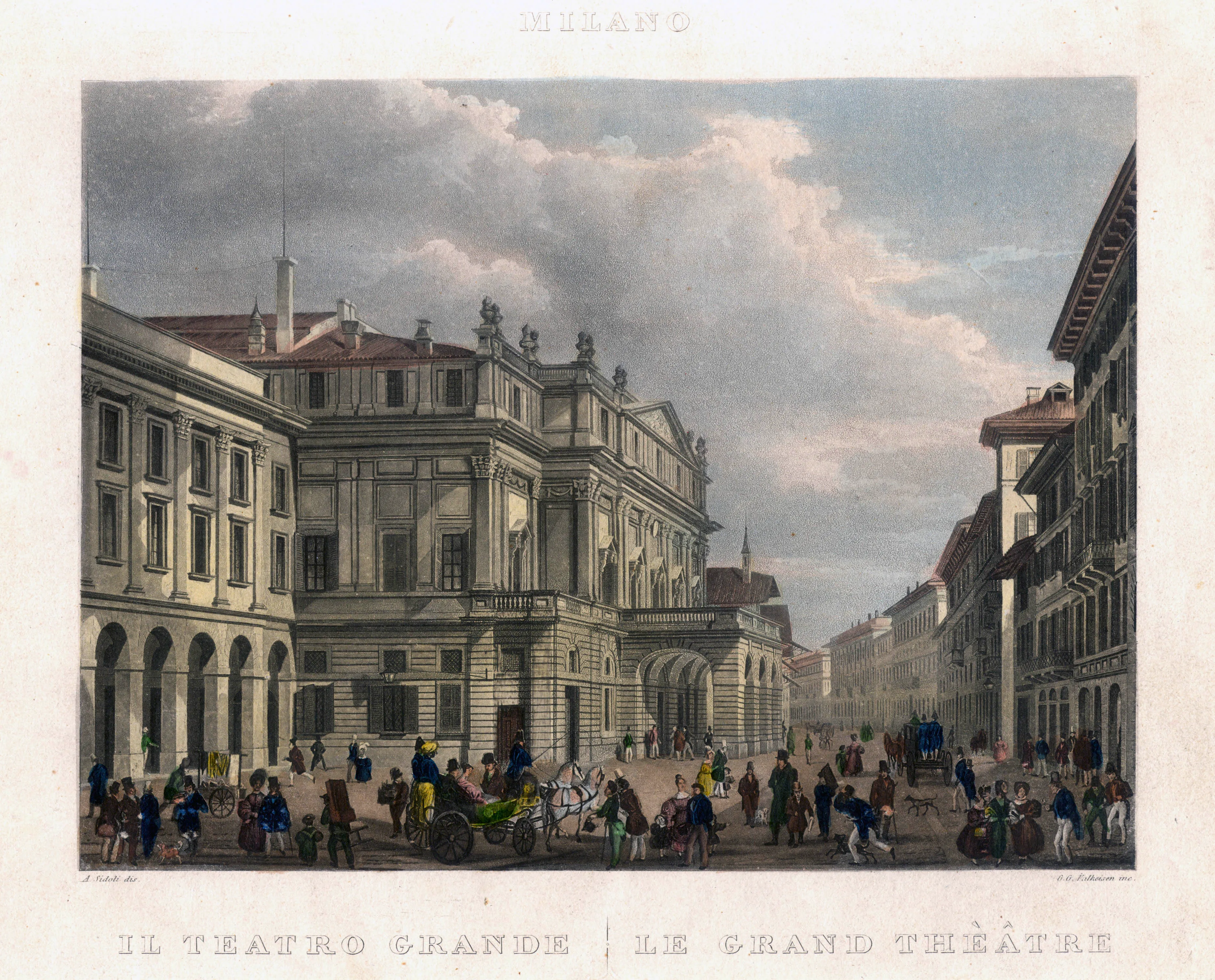
Teatro alla Scala was born from resilience. When Milan’s previous court theatre burned down in 1776, the city — under Habsburg influence — rallied to build anew. Empress Maria Theresa approved the plan, and architect Giuseppe Piermarini conceived a theatre that would both reflect Enlightenment order and accommodate a public hungry for spectacle. In 1778, with the premiere of Antonio Salieri’s ‘L’Europa riconosciuta’, La Scala opened its doors. The hall’s horseshoe shape, boxes for noble families, and social rituals turned opera into an evening-long civic event, one part art and one part mirror of society. From the start, La Scala was not merely a venue: it was a stage on which Milan performed its modern identity.
The theatre’s name draws from the Church of Santa Maria alla Scala, which once stood on the site. That blend of sacred memory and worldly pleasure marked the house’s character: a temple to the art of singing where business, romance, and politics mingled in the corridors. In the glow of candles and later gaslight, Milan learned to listen — and to judge. A Scala audience could make a career with applause or end it with silence. That rigour, born at the beginning, would define the house for centuries.
Architecture and Acoustics
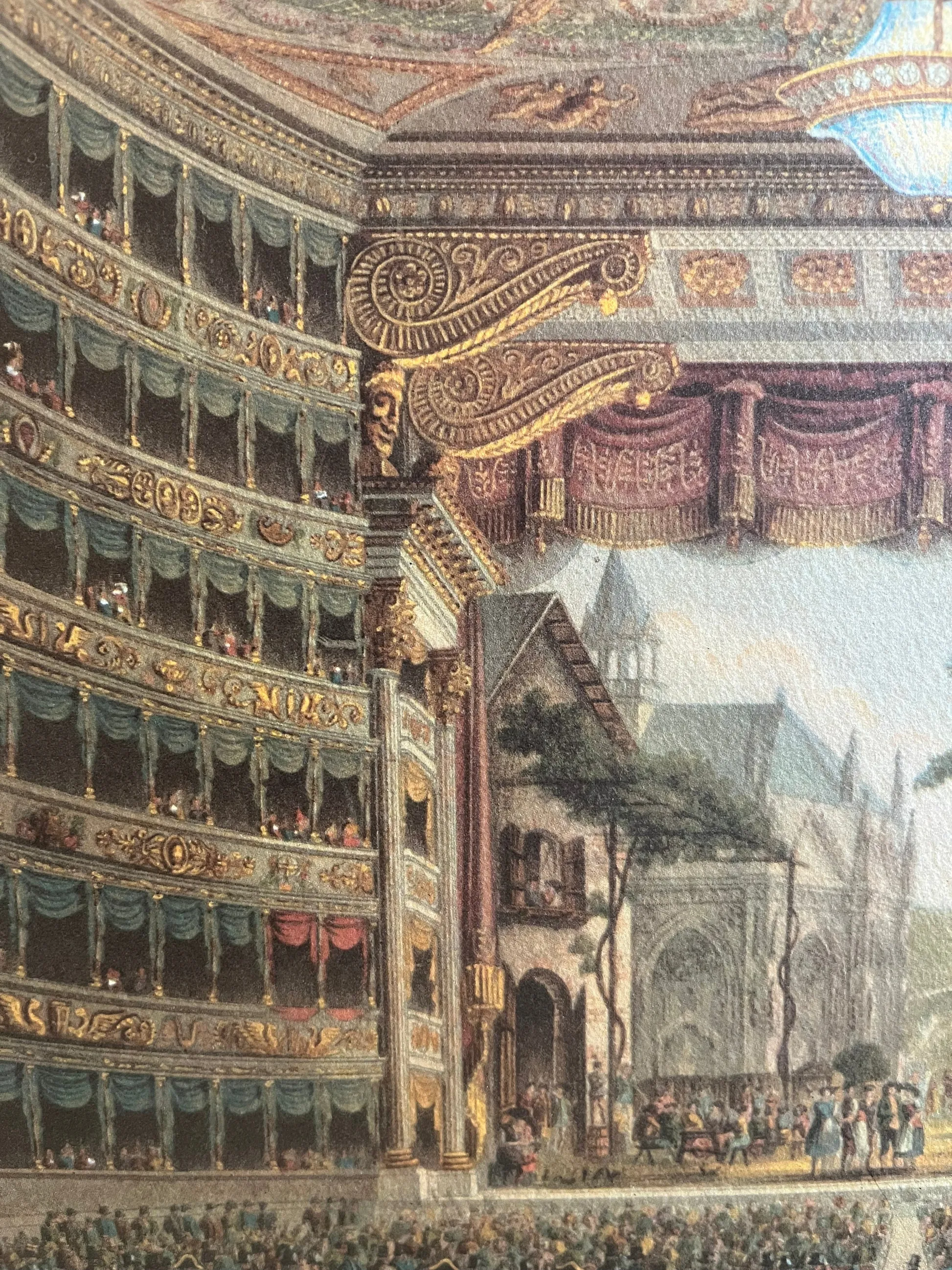
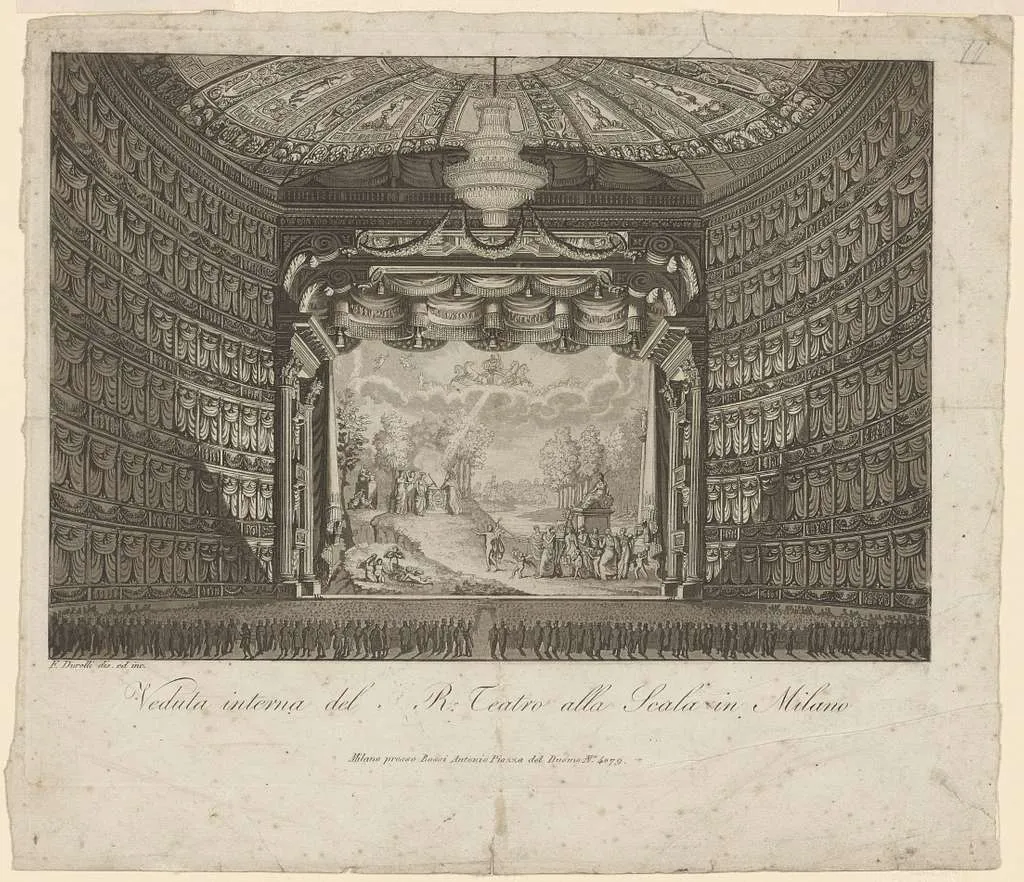
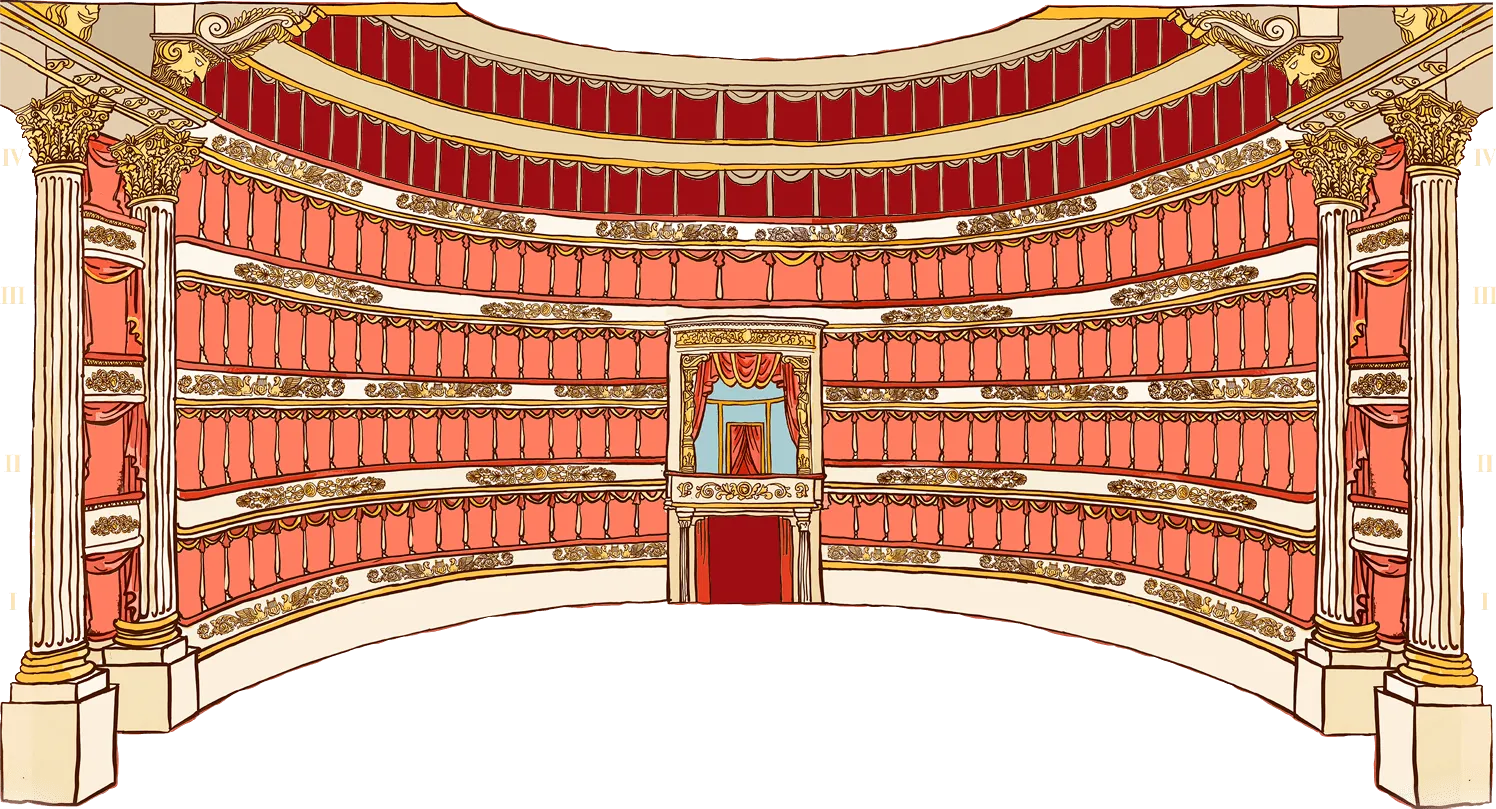
Piermarini’s design balanced clarity and grandeur. The auditorium follows the classic Italian horseshoe, a form prized for acoustic focus and social geometry. Six tiers of boxes rose like a gilded cliff; the proscenium framed a deep stage for elaborate scenery. Over time, materials evolved from candles to electricity, from wooden machinery to modern rigging, yet the essence remained: a room that carries the human voice with startling intimacy. Even a whisper from the stage can feather its way to the gods, while a Verdi chorus swells with a warmth that has seduced listeners for generations.
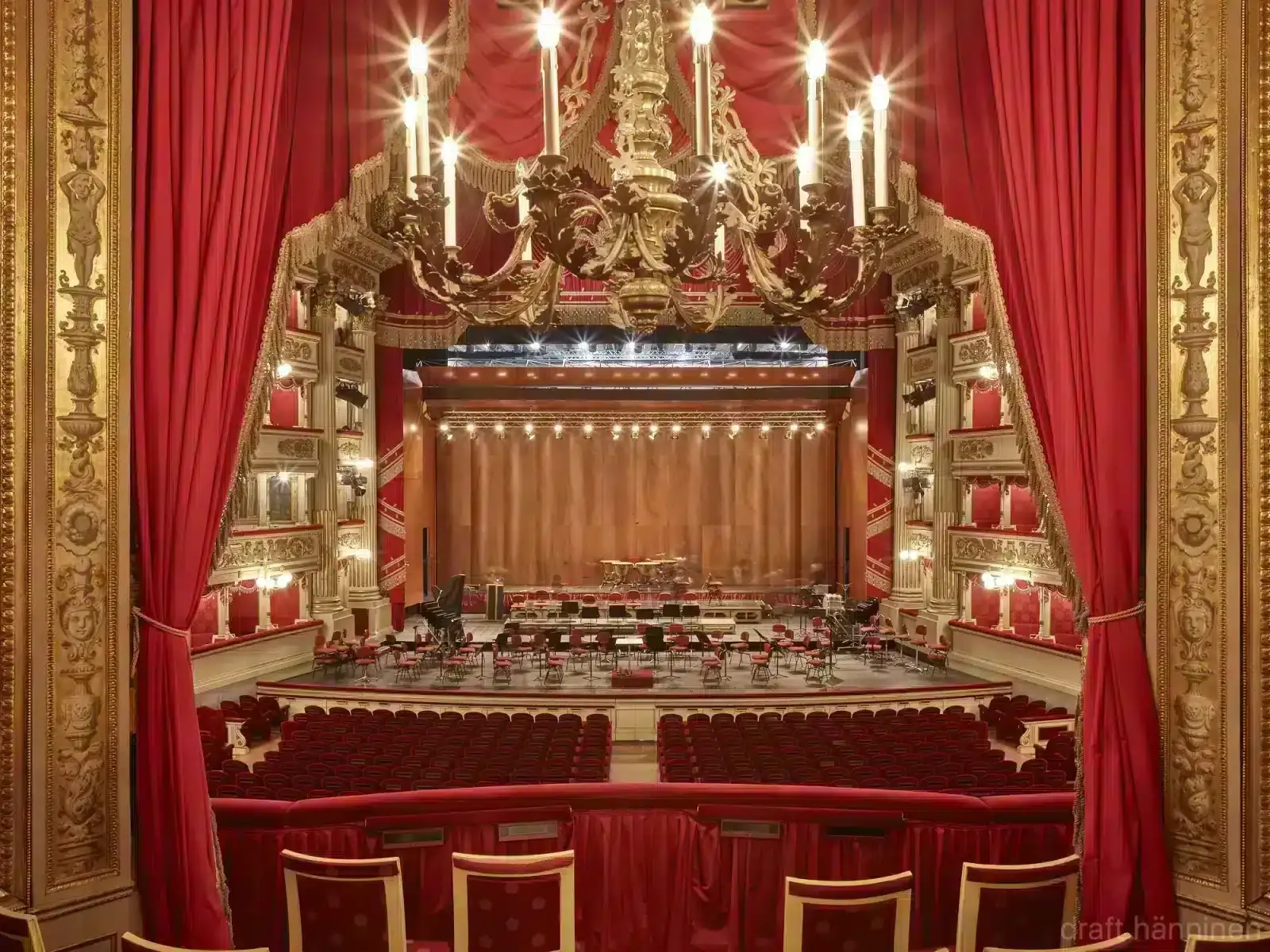
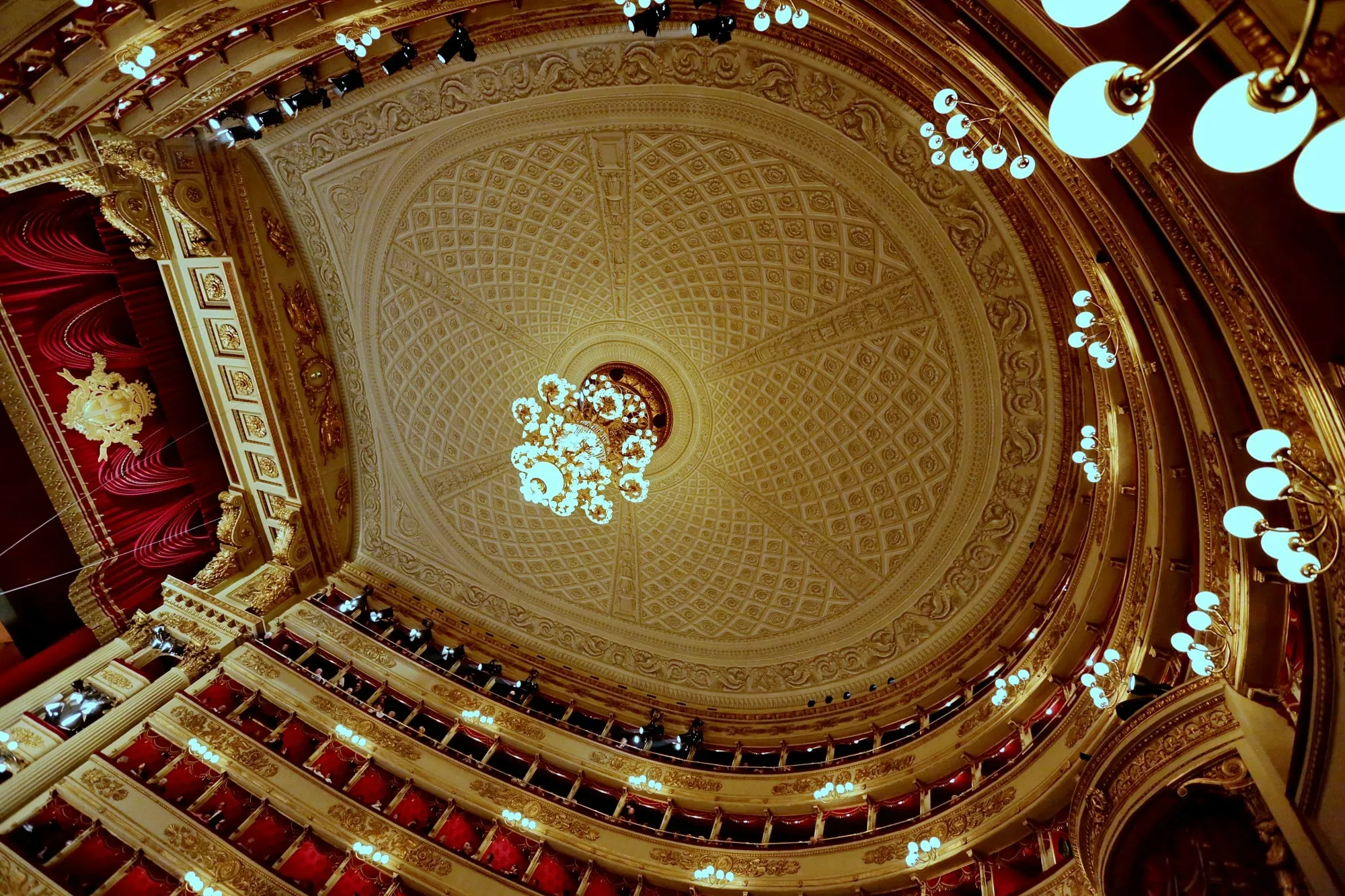
Acoustics here are not an accident but a craft. The curvature of the walls, the density of the wood, the soft absorption of velvet, the way sound ricochets through tiers and galleries — all combine to create that fabled Scala sound. Renovations across centuries were undertaken with almost religious caution, protecting the delicate equilibrium between brilliance and blend. To sit inside La Scala is to feel architecture become instrument.
Audiences, Boxes & Etiquette
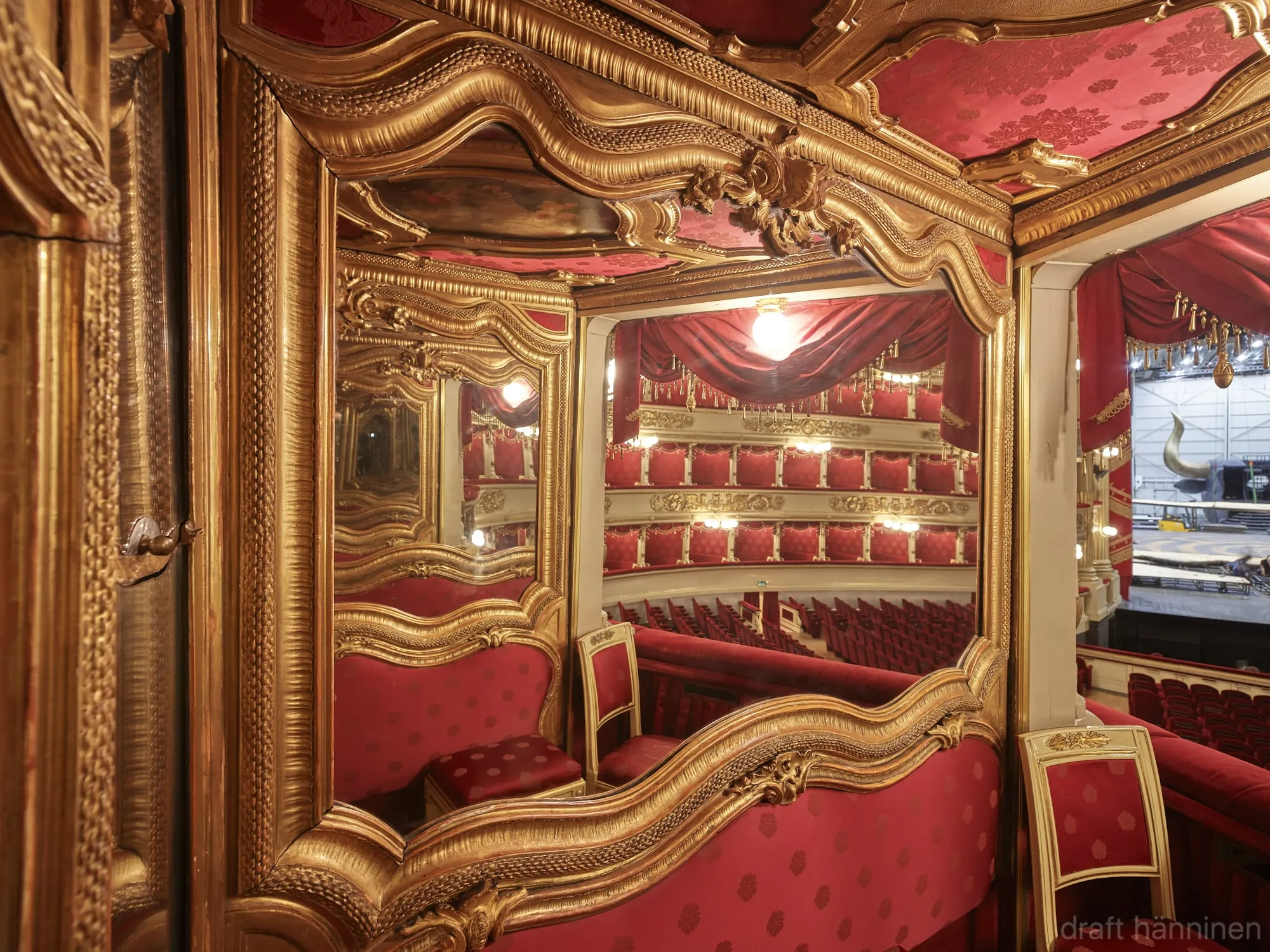
La Scala shaped Milanese society as much as Milanese society shaped La Scala. Boxes doubled as salons, where families greeted one another between arias and news traveled faster than any gazette. Etiquette demanded attention to the stage yet allowed for a dance of glances and gossip, a ritual of arrival and display. The theatre became a second drawing room for the city — democratic in its gallery, ceremonial in its boxes, united by music.
Over time, etiquette tightened: the appetite for chatter gave way to reverence for the art. The Milanese developed an ear — famously demanding, sometimes unforgiving, always precise. A high C could lift a singer to stardom or send them home to practise. But beneath the theatre’s stern standards ran a deep love: the understanding that when voice, orchestra, and stagecraft align, life seems to open like a curtain.
Composers, Premieres & Verdi
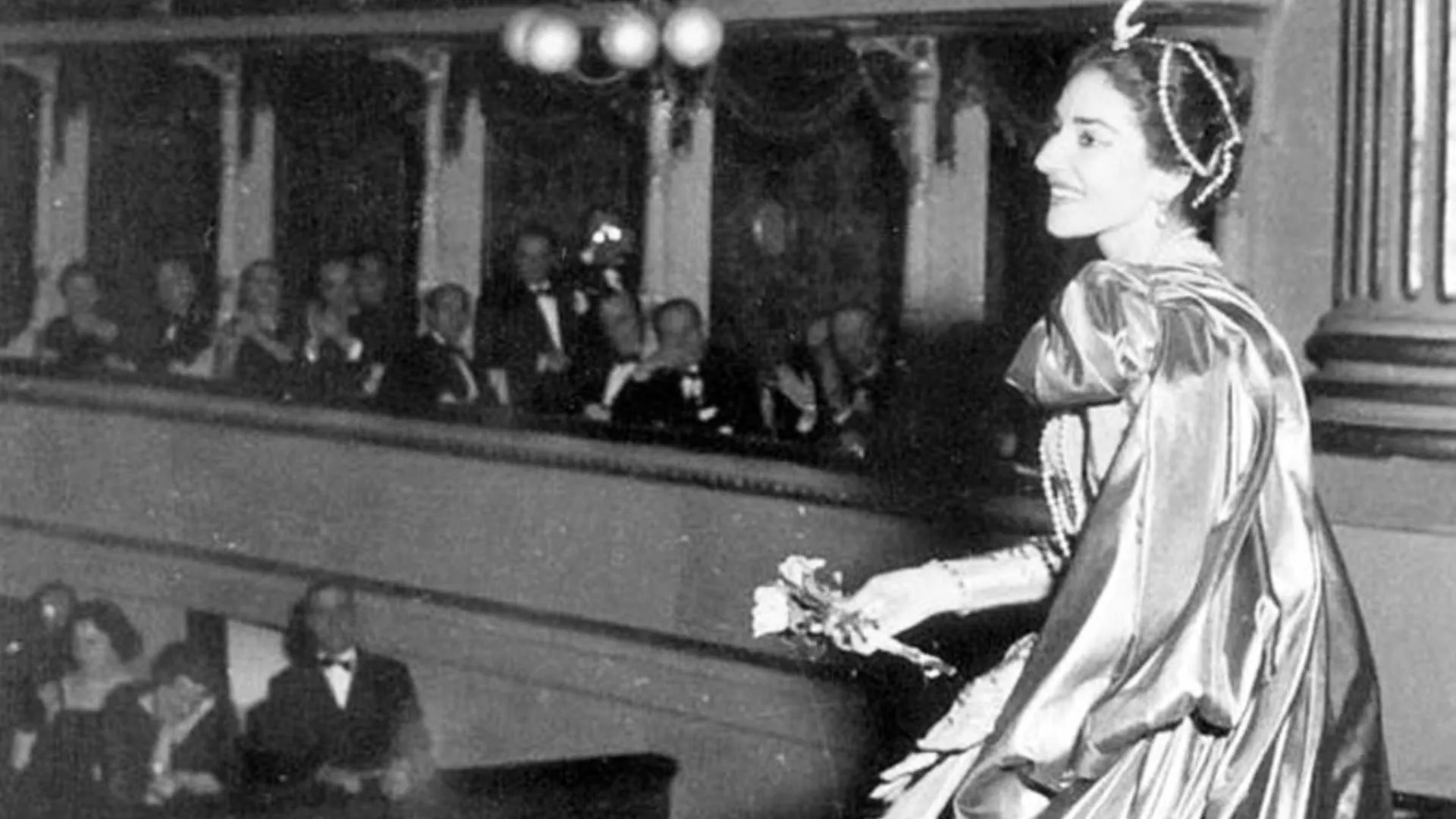
La Scala’s calendar reads like a roll call of music history. Rossini, Bellini, and Donizetti charmed early‑19th‑century audiences; later, Puccini and Mascagni traced new paths. Above all stands Giuseppe Verdi, whose complicated bond with Milan matured into premieres and triumphs that defined Italian opera for the world. Premieres weren’t just nights of entertainment — they were civic events where Milan measured its taste and talent against its own exacting ideals.
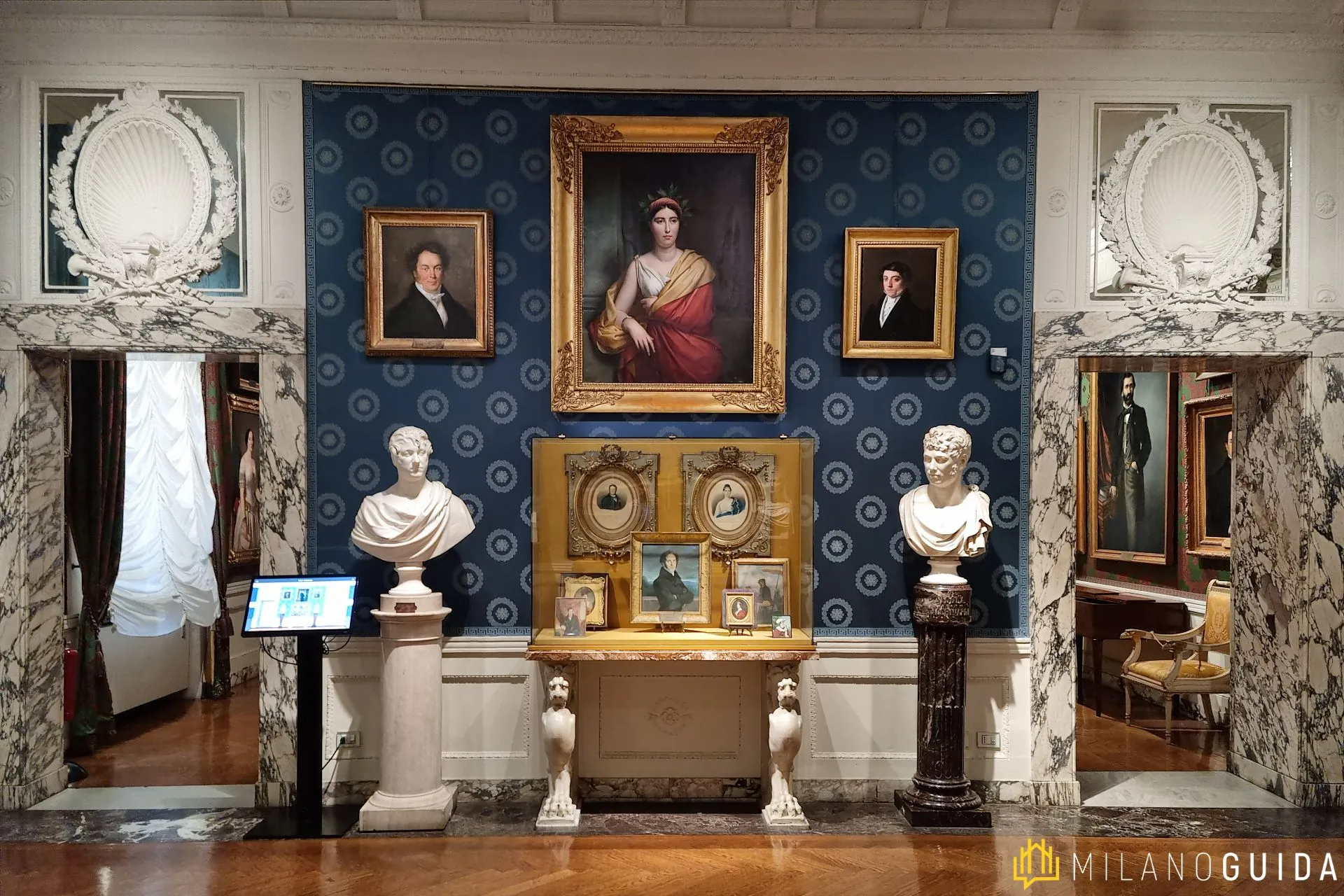
To speak of La Scala is to speak of premieres and of revivals that felt like new births: Callas carving roles into marble, conductors chiseling phrases until they shone, designers painting light with sets and costumes. The theatre’s museum preserves this lineage in scores and portraits, but the true archive lives in the collective memory of Milan — a city that still listens with its whole body.
Toscanini and the Scala Sound
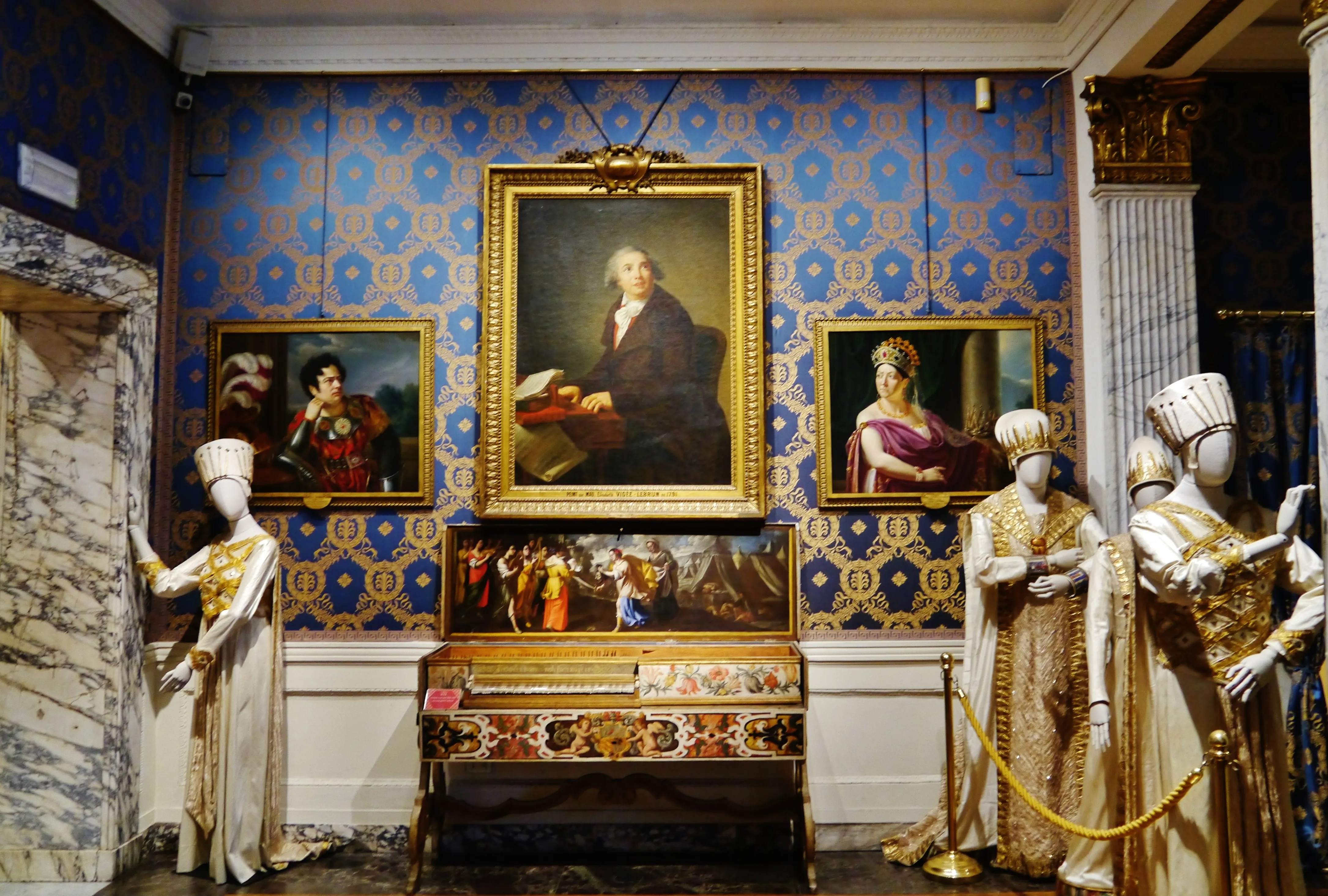
Arturo Toscanini refined the house style with ferocious clarity, insisting on discipline, fidelity to the score, and orchestral transparency. His rehearsals were laboratories, famous for their rigour and their revelations. Under his leadership, La Scala became not just a venue for stars but a workshop where interpretation itself was sculpted — phrase by phrase, balance by balance.
Radio and early recordings carried that sound beyond Milan, turning La Scala into a beacon for listeners far away. The orchestra’s timbre — lean yet warm — and the chorus’s diction became models. Even today, when the baton drops in this pit, musicians inherit a memory: a way of breathing together that time has tested and preserved.
War Damage and Rebirth (1943–46)
World War II scarred the theatre. Bombings in 1943 damaged La Scala, and for a time the stage was silent. The city, battered but unbroken, rallied to restore its musical heart. By 1946, with Toscanini returned to conduct the reopening concert, La Scala breathed again. The ovation belonged as much to Milan as to the maestro: a city reclaiming its voice.
That post‑war reopening became legend — not only for its music, but for what it signified: continuity, resilience, and the firm belief that culture is a form of rebuilding. The house carried its scars forward as stories, reminders that even when the lights go dark, a stage waits for the next beginning.
Renovations & Technology (2002–04)
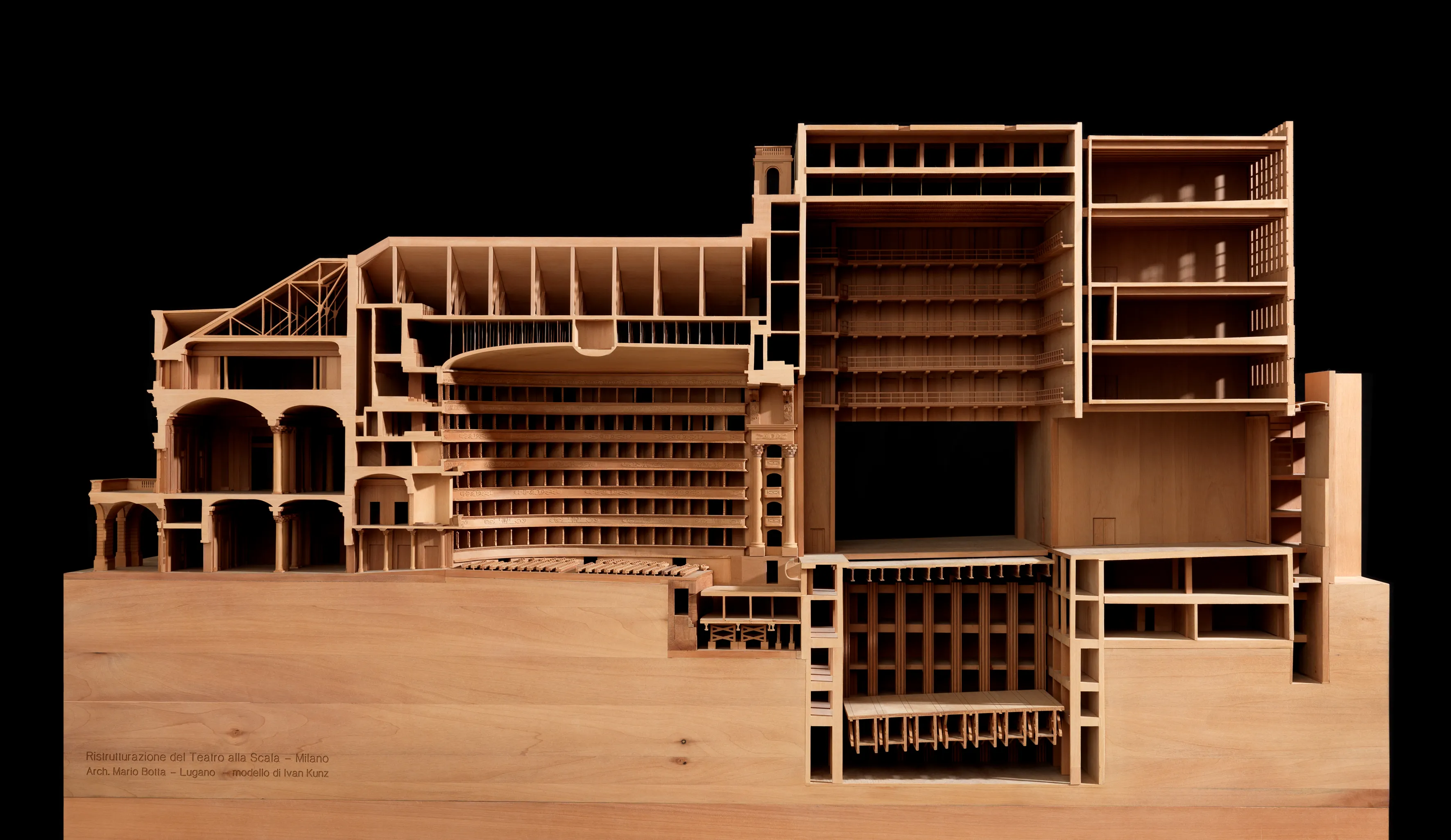
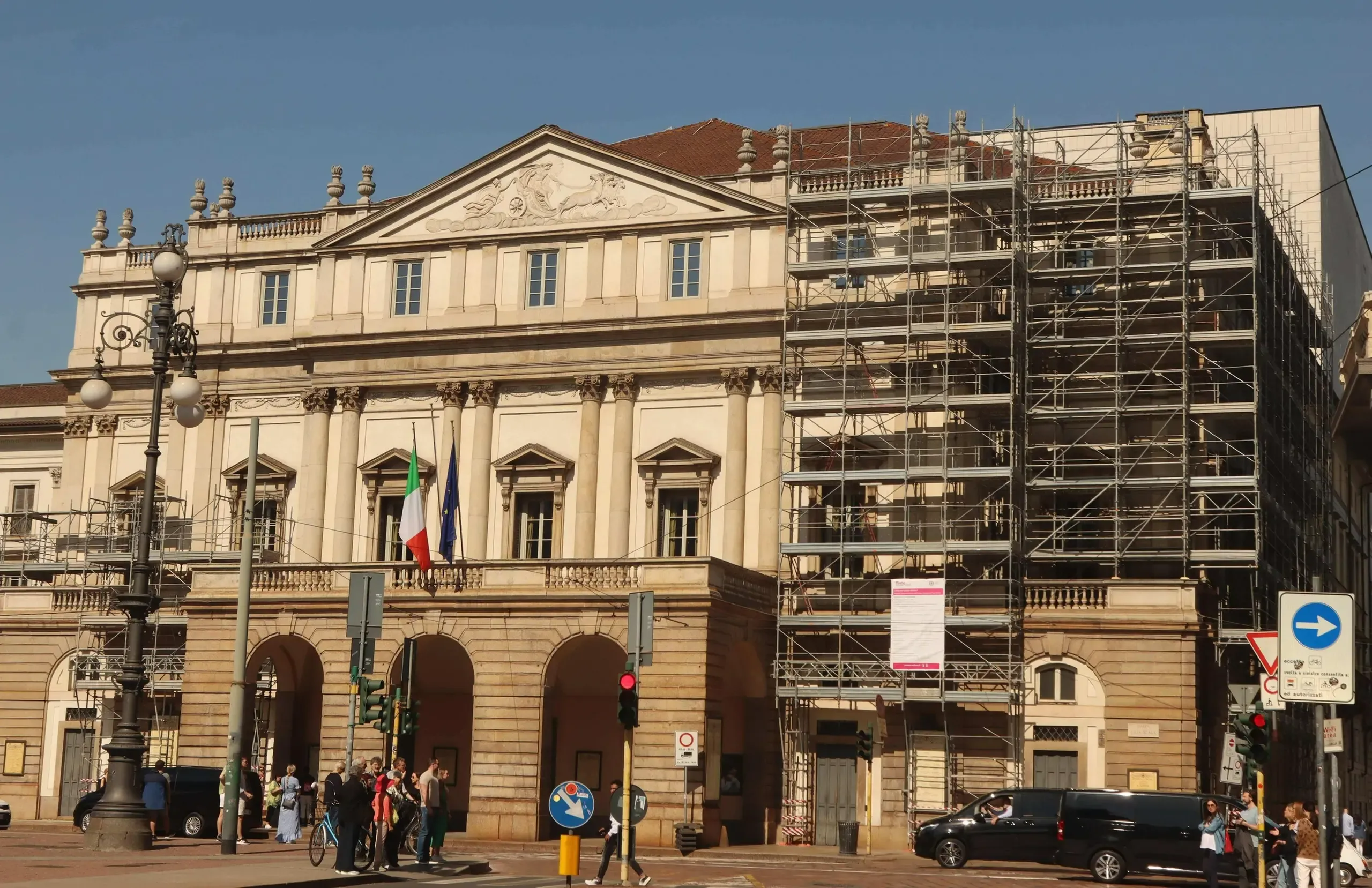
At the turn of the millennium, La Scala underwent a major renovation led by architect Mario Botta. A new stage tower and modern fly system expanded technical possibilities; rehearsal rooms and workshops improved production life; and backstage logistics were reshaped for the demands of contemporary opera and ballet.
Crucially, the renovation preserved the auditorium’s acoustic signature. Conservation respected the delicate balance of materials and proportions that had charmed ears for centuries. The result was a theatre anchored in heritage yet fluent in the language of modern stagecraft — able to shift from bel canto to cutting‑edge productions with grace.
Ballet, Chorus & Academy
La Scala is more than an opera house; it is an ecosystem. The Ballet — among the oldest companies in the world — blends Italian style with global repertoire, while the Chorus anchors productions with clarity and soul. The Accademia Teatro alla Scala trains musicians, technicians, and performers, passing on the quiet crafts without which grand nights cannot happen.
From pointe shoes to prop workshops, every department adds a thread to the tapestry. Visitors sense this in the museum and corridors: an undercurrent of making and learning, of tradition and renewal, of yesterday’s wisdom meeting tomorrow’s curiosity.
Recordings, Broadcasts & Media
As technology advanced, La Scala became a broadcasting lighthouse. Radio, LPs, CDs, and streams carried its performances worldwide, turning local triumphs into shared experiences. For many, the first encounter with opera happened through a Scala recording, a voice in a living room that opened a door to a new world.
These documents aren’t relics; they are living companions to the theatre. They invite comparisons across eras, reveal interpretive lineages, and keep La Scala’s sound traveling — a moving chorus of ghosts and geniuses that continues to sing.
Opening Nights & Traditions
Milan marks its cultural calendar by La Scala’s season opening on 7 December, the feast of Saint Ambrose. It’s not just a premiere; it’s a rite. The city dresses elegantly, critics sharpen their pens, and the theatre bets the year’s tone on a single night. Traditions — encores, curtain calls, a certain electricity in the air — come alive anew.
Other rituals endure too: the polite murmur as the lights dim, the hush before a famous aria, the roar that greets a daring high note. These customs bind strangers into a temporary community, proving that shared listening is one of urban life’s quiet glories. ✨
Preservation and Future Plans
Preserving La Scala means safeguarding both fabric and function: the auditorium’s finishes, the museum’s collections, and the stage machinery that makes dreams move. Conservation teams balance cleaning with patina, replacement with repair. Every intervention asks the same question: how to keep yesterday audible while making room for tomorrow’s voices?
Future plans continue this careful stewardship: upgrading systems discreetly, expanding educational programs, and sustaining access for visitors while protecting rehearsal and performance life. The goal is simple and noble — to make excellence feel effortless, even though it never is.
Nearby Milan Landmarks
From Piazza della Scala, walk to the Duomo and its terraces, cross the Galleria Vittorio Emanuele II, or wander to Brera’s art‑filled streets. The Castello Sforzesco and its museums are a pleasant stroll away, as are fashion avenues where Milan’s sartorial pulse quickens.
Pair your visit with the Pinacoteca di Brera, the Museo del Novecento, or an espresso in a historic café. Milan rewards curiosity — it’s a city of details, best discovered between notes.
Cultural Significance & Myth
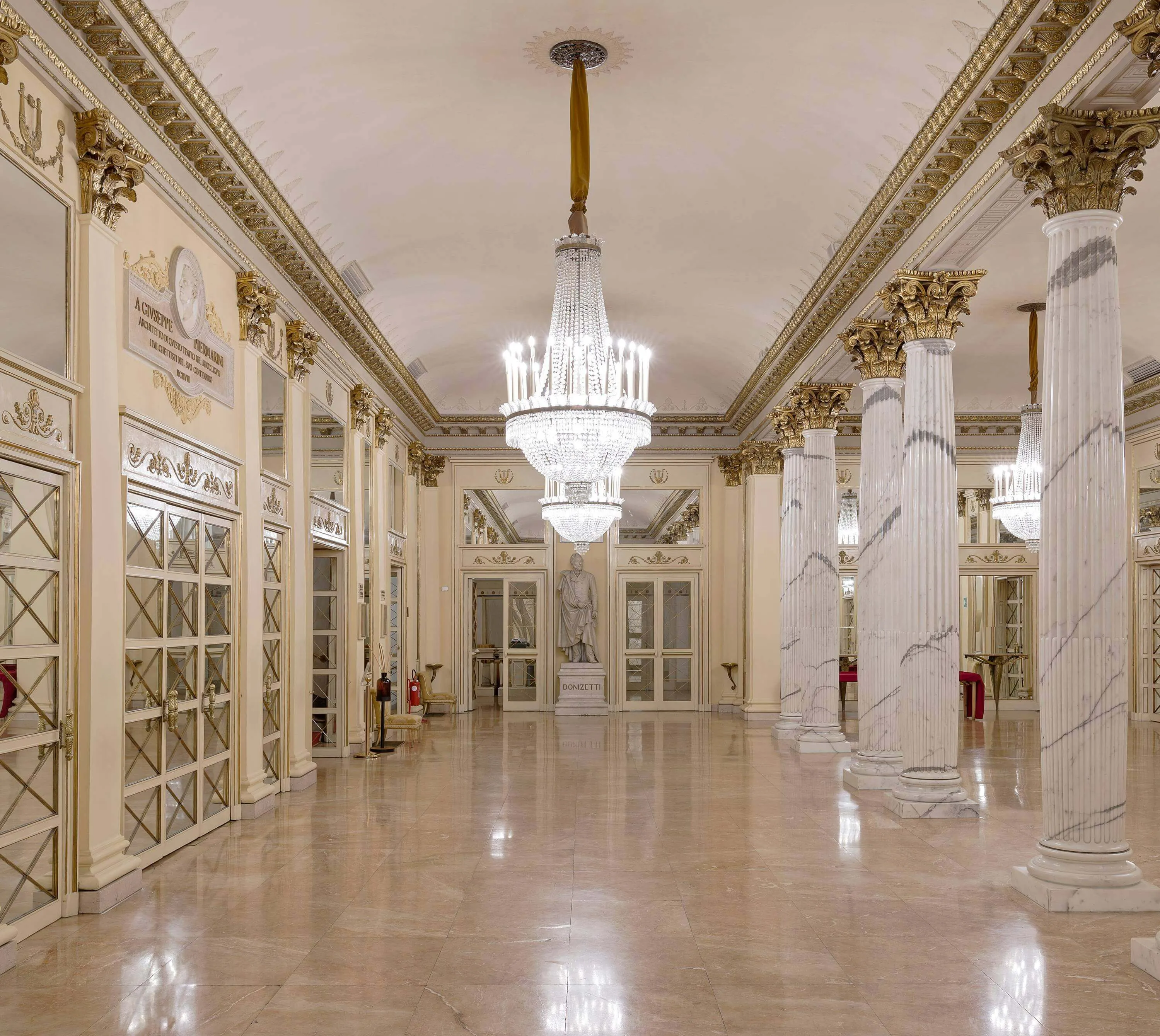
Teatro alla Scala is a civic myth as much as a theatre — a symbol of Milan’s discipline, ambition, and taste. To have sung here is to have been weighed by one of the world’s most discerning audiences. To have listened here is to join a lineage of citizens for whom art is both pleasure and duty.
That myth remains alive because La Scala renews it nightly: with discipline in the pit, courage on stage, and generosity in the hall. A great theatre is a promise made to the future, and Milan keeps it.
Table of Contents
Founding and Patronage (1778)
Teatro alla Scala was born from resilience. When Milan’s previous court theatre burned down in 1776, the city — under Habsburg influence — rallied to build anew. Empress Maria Theresa approved the plan, and architect Giuseppe Piermarini conceived a theatre that would both reflect Enlightenment order and accommodate a public hungry for spectacle. In 1778, with the premiere of Antonio Salieri’s ‘L’Europa riconosciuta’, La Scala opened its doors. The hall’s horseshoe shape, boxes for noble families, and social rituals turned opera into an evening-long civic event, one part art and one part mirror of society. From the start, La Scala was not merely a venue: it was a stage on which Milan performed its modern identity.
The theatre’s name draws from the Church of Santa Maria alla Scala, which once stood on the site. That blend of sacred memory and worldly pleasure marked the house’s character: a temple to the art of singing where business, romance, and politics mingled in the corridors. In the glow of candles and later gaslight, Milan learned to listen — and to judge. A Scala audience could make a career with applause or end it with silence. That rigour, born at the beginning, would define the house for centuries.
Architecture and Acoustics
Piermarini’s design balanced clarity and grandeur. The auditorium follows the classic Italian horseshoe, a form prized for acoustic focus and social geometry. Six tiers of boxes rose like a gilded cliff; the proscenium framed a deep stage for elaborate scenery. Over time, materials evolved from candles to electricity, from wooden machinery to modern rigging, yet the essence remained: a room that carries the human voice with startling intimacy. Even a whisper from the stage can feather its way to the gods, while a Verdi chorus swells with a warmth that has seduced listeners for generations.
Acoustics here are not an accident but a craft. The curvature of the walls, the density of the wood, the soft absorption of velvet, the way sound ricochets through tiers and galleries — all combine to create that fabled Scala sound. Renovations across centuries were undertaken with almost religious caution, protecting the delicate equilibrium between brilliance and blend. To sit inside La Scala is to feel architecture become instrument.
Audiences, Boxes & Etiquette
La Scala shaped Milanese society as much as Milanese society shaped La Scala. Boxes doubled as salons, where families greeted one another between arias and news traveled faster than any gazette. Etiquette demanded attention to the stage yet allowed for a dance of glances and gossip, a ritual of arrival and display. The theatre became a second drawing room for the city — democratic in its gallery, ceremonial in its boxes, united by music.
Over time, etiquette tightened: the appetite for chatter gave way to reverence for the art. The Milanese developed an ear — famously demanding, sometimes unforgiving, always precise. A high C could lift a singer to stardom or send them home to practise. But beneath the theatre’s stern standards ran a deep love: the understanding that when voice, orchestra, and stagecraft align, life seems to open like a curtain.
Composers, Premieres & Verdi
La Scala’s calendar reads like a roll call of music history. Rossini, Bellini, and Donizetti charmed early‑19th‑century audiences; later, Puccini and Mascagni traced new paths. Above all stands Giuseppe Verdi, whose complicated bond with Milan matured into premieres and triumphs that defined Italian opera for the world. Premieres weren’t just nights of entertainment — they were civic events where Milan measured its taste and talent against its own exacting ideals.
To speak of La Scala is to speak of premieres and of revivals that felt like new births: Callas carving roles into marble, conductors chiseling phrases until they shone, designers painting light with sets and costumes. The theatre’s museum preserves this lineage in scores and portraits, but the true archive lives in the collective memory of Milan — a city that still listens with its whole body.
Toscanini and the Scala Sound
Arturo Toscanini refined the house style with ferocious clarity, insisting on discipline, fidelity to the score, and orchestral transparency. His rehearsals were laboratories, famous for their rigour and their revelations. Under his leadership, La Scala became not just a venue for stars but a workshop where interpretation itself was sculpted — phrase by phrase, balance by balance.
Radio and early recordings carried that sound beyond Milan, turning La Scala into a beacon for listeners far away. The orchestra’s timbre — lean yet warm — and the chorus’s diction became models. Even today, when the baton drops in this pit, musicians inherit a memory: a way of breathing together that time has tested and preserved.
War Damage and Rebirth (1943–46)
World War II scarred the theatre. Bombings in 1943 damaged La Scala, and for a time the stage was silent. The city, battered but unbroken, rallied to restore its musical heart. By 1946, with Toscanini returned to conduct the reopening concert, La Scala breathed again. The ovation belonged as much to Milan as to the maestro: a city reclaiming its voice.
That post‑war reopening became legend — not only for its music, but for what it signified: continuity, resilience, and the firm belief that culture is a form of rebuilding. The house carried its scars forward as stories, reminders that even when the lights go dark, a stage waits for the next beginning.
Renovations & Technology (2002–04)
At the turn of the millennium, La Scala underwent a major renovation led by architect Mario Botta. A new stage tower and modern fly system expanded technical possibilities; rehearsal rooms and workshops improved production life; and backstage logistics were reshaped for the demands of contemporary opera and ballet.
Crucially, the renovation preserved the auditorium’s acoustic signature. Conservation respected the delicate balance of materials and proportions that had charmed ears for centuries. The result was a theatre anchored in heritage yet fluent in the language of modern stagecraft — able to shift from bel canto to cutting‑edge productions with grace.
Ballet, Chorus & Academy
La Scala is more than an opera house; it is an ecosystem. The Ballet — among the oldest companies in the world — blends Italian style with global repertoire, while the Chorus anchors productions with clarity and soul. The Accademia Teatro alla Scala trains musicians, technicians, and performers, passing on the quiet crafts without which grand nights cannot happen.
From pointe shoes to prop workshops, every department adds a thread to the tapestry. Visitors sense this in the museum and corridors: an undercurrent of making and learning, of tradition and renewal, of yesterday’s wisdom meeting tomorrow’s curiosity.
Recordings, Broadcasts & Media
As technology advanced, La Scala became a broadcasting lighthouse. Radio, LPs, CDs, and streams carried its performances worldwide, turning local triumphs into shared experiences. For many, the first encounter with opera happened through a Scala recording, a voice in a living room that opened a door to a new world.
These documents aren’t relics; they are living companions to the theatre. They invite comparisons across eras, reveal interpretive lineages, and keep La Scala’s sound traveling — a moving chorus of ghosts and geniuses that continues to sing.
Opening Nights & Traditions
Milan marks its cultural calendar by La Scala’s season opening on 7 December, the feast of Saint Ambrose. It’s not just a premiere; it’s a rite. The city dresses elegantly, critics sharpen their pens, and the theatre bets the year’s tone on a single night. Traditions — encores, curtain calls, a certain electricity in the air — come alive anew.
Other rituals endure too: the polite murmur as the lights dim, the hush before a famous aria, the roar that greets a daring high note. These customs bind strangers into a temporary community, proving that shared listening is one of urban life’s quiet glories. ✨
Preservation and Future Plans
Preserving La Scala means safeguarding both fabric and function: the auditorium’s finishes, the museum’s collections, and the stage machinery that makes dreams move. Conservation teams balance cleaning with patina, replacement with repair. Every intervention asks the same question: how to keep yesterday audible while making room for tomorrow’s voices?
Future plans continue this careful stewardship: upgrading systems discreetly, expanding educational programs, and sustaining access for visitors while protecting rehearsal and performance life. The goal is simple and noble — to make excellence feel effortless, even though it never is.
Nearby Milan Landmarks
From Piazza della Scala, walk to the Duomo and its terraces, cross the Galleria Vittorio Emanuele II, or wander to Brera’s art‑filled streets. The Castello Sforzesco and its museums are a pleasant stroll away, as are fashion avenues where Milan’s sartorial pulse quickens.
Pair your visit with the Pinacoteca di Brera, the Museo del Novecento, or an espresso in a historic café. Milan rewards curiosity — it’s a city of details, best discovered between notes.
Cultural Significance & Myth
Teatro alla Scala is a civic myth as much as a theatre — a symbol of Milan’s discipline, ambition, and taste. To have sung here is to have been weighed by one of the world’s most discerning audiences. To have listened here is to join a lineage of citizens for whom art is both pleasure and duty.
That myth remains alive because La Scala renews it nightly: with discipline in the pit, courage on stage, and generosity in the hall. A great theatre is a promise made to the future, and Milan keeps it.