Время посещенияЗакрыто
|Вторник, Октябрь 13, 2026Piazza della Scala, 20121 Milano MI, Италия
Назад к experience
foyer
La Scala’s Foyer and Social Choreography
Routes, mirrors, and etiquette form a luminous prelude to performance at La Scala.
12/23/2025
14 min read
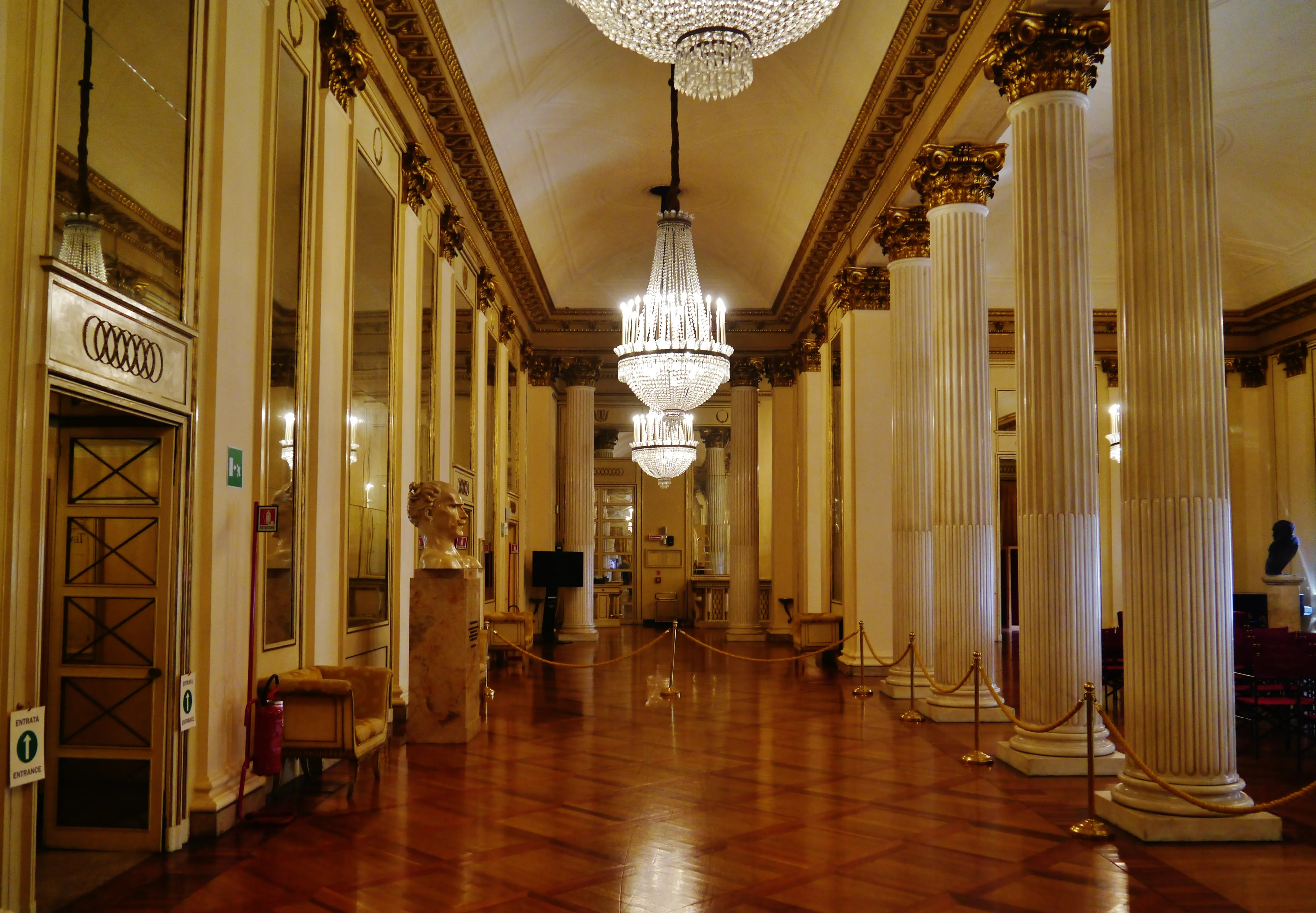
The foyer is a mirror-machine. It orients bodies and gazes, staging arrival and recognition.
🚶 Route & Thresholds
- Layered thresholds: From street to ticket check to foyer, pace narrows.
- Mirrors: Not vanity—spatial calibration and social reassurance.
- Materials: Polished stone and timber invite low footfall noise.
🪞 Gaze Economy
- Diffuse light: Avoids specular harshness; supports soft recognition.
- Angles: Mirrors positioned to multiply but not disorient.
The foyer prepares audience auras—comportment aligns with acoustics and costume.
[^etiquette]: Historical etiquette manuals once prescribed arrivals by carriage time and garment.
🧭 Context & Rituals
- Ticketing cadence: Check → pause → glide; tempo calms voice levels.
- Garment logic: Cloak and fabric choices reduce rustle.
🔍 Material & Light
- Timber rails: Subtle hand warmth supports flow.
- Lens glare control: Diffusers avoid specular spikes in mirror fields.
🧭 Social Micro‑Choreography
| Moment | Cue | Outcome |
|---|---|---|
| Entrance | Soft light | Lower pace |
| Waiting | Mirrors | Self‑alignment |
| Call to seats | Bell | Route transitions |
❓ FAQ
- Why so many mirrors? They offer social calibration and spatial reassurance.
- Is noise a problem? Materials and etiquette minimize it.
✅ Key Takeaways
- Foyer crafts arrival as a shared prelude.
- Light + mirror = confidence without vanity.
Об авторе

Cultural Sociologist
Как любитель Милана и музыки, я создал этот гид, чтобы помочь посетителям почувствовать дух Ла Скала — от великих премьер до тихого ремесла за кулисами.
Tags
Foyer
Ritual
Mirrors
Arrival
Etiquette
Comments (0)
Leave a Comment
Loading comments...